
TL;DR

Turn your quiet moments into listening time
- Thousands of audiobooks, podcasts and originals
- Listen on your phone, tablet or Echo — also offline
- Cancel anytime
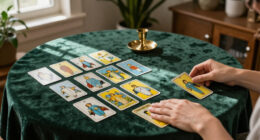
Tarot originally began as a courtly card game in the 15th century. Over centuries, it evolved into a tool for divination, a transformation driven by cultural shifts and spiritual movements. This history reveals how a game became a spiritual practice.
Tarot, originally a courtly card game in 15th-century Italy, has become widely associated with divination and spiritual insight today. This transformation, spanning centuries, reflects changing cultural and spiritual practices, making Tarot a significant symbol in modern mysticism.
Historical records confirm that Tarot cards were first created in the mid-15th century in Italy as a game played by aristocratic circles. Known as “Tarocchi,” these cards featured elaborate artwork and were used for entertainment among the noble classes, similar to the artistic history of tarot.
It is only in the 18th and 19th centuries that Tarot began to be associated with mysticism and esoteric practices. Influential occultists, such as Antoine Court de Gébelin and Éliphas Lévi, promoted the idea that Tarot held hidden spiritual meanings, linking the cards to ancient Egyptian and mystical symbolism.
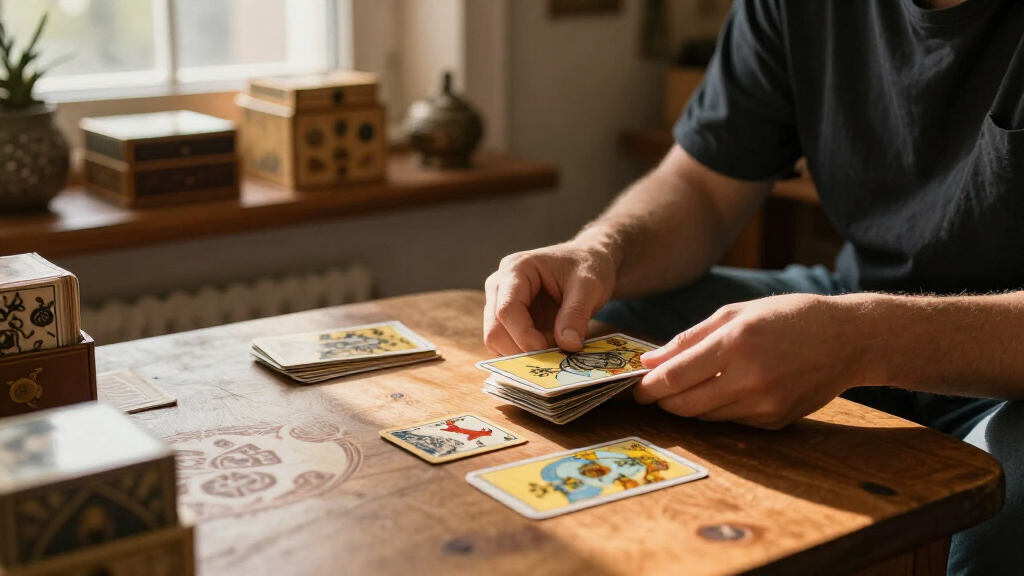
Today, Tarot is predominantly used for divination, with practitioners interpreting card spreads to gain insight into personal questions or future events. This shift from game to spiritual tool reflects broader cultural movements toward mysticism and alternative spirituality.
Why Tarot’s Transformation Matters in Modern Spirituality
The evolution of Tarot from a courtly game to a divinatory tool highlights how cultural practices can shift over centuries, influenced by spiritual movements and societal changes. Understanding this history deepens appreciation for Tarot’s symbolic complexity and its role in contemporary spiritual practices.
This transformation also illustrates how objects can acquire new meanings, serving different functions across eras, which is relevant for those interested in the history of spirituality and cultural adaptation.
As an affiliate, we earn on qualifying purchases.
Historical Roots of Tarot as a Courtly Card Game
Tarot cards emerged in 15th-century Italy, initially as a leisure activity for aristocrats. Known as “Tarocchi,” these decks were used in social settings and featured elaborate artwork, often depicting allegories and courtly themes. The original purpose was entertainment, with no immediate connection to mystical or divinatory practices.
It was only centuries later that Tarot’s symbolic and mystical associations developed, influenced by European occultism and esoteric philosophies. The 18th-century publication of texts linking Tarot to Egyptian mythology marked a turning point in its spiritual interpretation.
“Tarot cards were created as a sophisticated game played by the aristocracy, with no initial intent for divination or spiritual use.”
— Dr. Maria Rossi, historian of European games
As an affiliate, we earn on qualifying purchases.
Unclear Aspects of Tarot’s Transition to Divination
While it is well-documented that Tarot shifted from a game to a spiritual tool over centuries, the precise timeline and cultural factors that accelerated this change remain somewhat unclear. The extent of influence from specific occultists and movements is still being studied, and there is debate over whether the spiritual interpretation was a gradual evolution or a series of deliberate shifts.
Additionally, the original intent behind Tarot’s creation is well-established, but how quickly and widely the spiritual meanings were adopted in different regions is less certain.
As an affiliate, we earn on qualifying purchases.
Future Research and Cultural Reappraisal of Tarot
Scholars continue to investigate the detailed history of Tarot’s transformation, with ongoing research into its early symbolism and spread across Europe. Meanwhile, contemporary practitioners and spiritual communities are re-evaluating Tarot’s historical roots, blending traditional and modern interpretations.
Future developments may include more nuanced understandings of how objects like Tarot evolve in cultural contexts, and how their meanings are reshaped by societal shifts and spiritual movements.
As an affiliate, we earn on qualifying purchases.
Key Questions
When did Tarot first become associated with divination?
Although Tarot was created as a game in the 15th century, its association with divination began in the 18th and 19th centuries, influenced by occultists and esoteric movements.
Was Tarot always meant for spiritual use?
No, originally Tarot was a courtly card game. Its spiritual and mystical associations developed centuries later, driven by cultural and philosophical shifts.
Are all Tarot decks used for divination today?
Most modern Tarot decks are designed for spiritual or divinatory purposes, though some are created purely as art or for gaming, reflecting their original roots.
How did occultists influence Tarot’s spiritual interpretation?
Figures like Court de Gébelin and Lévi promoted the idea that Tarot contained hidden mystical knowledge, which helped popularize its use in divination.
What does the history of Tarot tell us about cultural change?
It illustrates how objects can acquire new meanings over time, shifting from entertainment to spiritual symbols, shaped by societal, philosophical, and spiritual influences.
Source: rss
Fall Picks
fall essentials
As an affiliate, we earn on qualifying purchases.