
After an intense spiritual experience, it’s crucial to ground yourself with focused breathing, mindfulness, and gentle grounding exercises to stay balanced. Create a calming environment by reducing harsh lighting and adding natural elements to promote serenity. Practice self-care routines like journaling and emotional regulation techniques to process your feelings. Stay patient and compassionate with yourself as you integrate these emotions. If you keep exploring, you’ll discover more ways to navigate this transforming journey smoothly.

Turn your quiet moments into listening time
- Thousands of audiobooks, podcasts and originals
- Listen on your phone, tablet or Echo — also offline
- Cancel anytime
Key Takeaways
- Practice grounding techniques like focused breathing and mindfulness to reconnect with the present moment.
- Acknowledge and accept fluctuating emotions without judgment to facilitate emotional processing.
- Create a calming environment with natural elements and gentle lighting to support emotional stability.
- Engage in regular meditation and self-care routines to strengthen emotional resilience.
- Use journaling and routines to process insights and maintain a balanced, steady state.
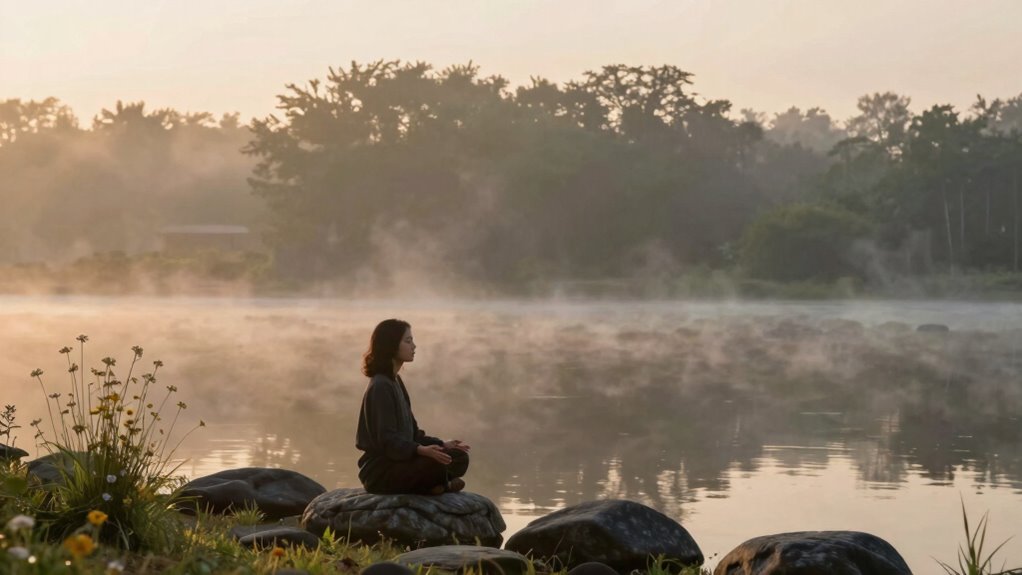
Experiencing a profound spiritual moment can be both uplifting and overwhelming, leaving you with a mix of joy, confusion, or even doubt. After such an intense experience, it’s common to feel a whirlwind of emotions that can be hard to process. You might find yourself questioning your beliefs, feeling disconnected from everyday life, or overwhelmed by the depth of what you’ve experienced. To regain emotional balance, it’s essential to ground yourself and integrate these moments thoughtfully.
One effective way to do this is by practicing meditation techniques. Meditation helps you slow down, center your thoughts, and create space between your feelings and reactions. Even just a few minutes of focused breathing can help you reconnect with the present moment and ease any emotional turbulence. Guided meditations can steer you through specific themes like acceptance or grounding, making it easier to process your feelings without becoming overwhelmed. The key is consistency—regular meditation not only calms your mind but also strengthens your ability to navigate emotional highs and lows that follow powerful spiritual experiences.
Alongside meditation techniques, incorporating mindfulness practices into your daily routine is essential. Mindfulness encourages you to observe your thoughts and emotions without judgment, which can prevent you from getting caught up in confusion or doubt. When you notice feelings of uncertainty or doubt creeping in, gently acknowledge them without trying to suppress or amplify them. Over time, this practice cultivates a sense of acceptance and patience, allowing you to process your spiritual experiences more smoothly. Mindfulness also helps you stay connected to your body and surroundings, anchoring you in the here and now rather than getting lost in the aftermath of your spiritual insights. Additionally, understanding the contrast ratio of your environment can help you create a space that supports your emotional and spiritual healing by reducing harsh lighting and fostering a calming atmosphere. Creating a supportive environment can significantly enhance your ability to process and integrate your spiritual experiences with greater ease. Incorporating natural elements, such as plants or water features, can further promote a sense of serenity and grounding. Incorporating emotional regulation techniques, such as grounding exercises or journaling, can further assist in managing intense feelings during this transitional phase. Recognizing the importance of a balanced environment can be crucial in maintaining your emotional well-being during this time.
guided meditation for emotional balance
As an affiliate, we earn on qualifying purchases.
As an affiliate, we earn on qualifying purchases.
Frequently Asked Questions
How Long Does Emotional Imbalance Typically Last After Spiritual Experiences?
Emotional imbalance after spiritual experiences can last from days to several weeks, depending on your emotional resilience and how well you practice spiritual integration. During this time, you might feel overwhelmed or uncertain, but staying grounded helps. Engage in calming activities, seek support, and reflect on your insights. With patience and effort, your emotional balance will restore as you integrate the experience into your daily life.
Can Intense Spiritual Experiences Cause Long-Term Mental Health Issues?
Intense spiritual experiences can sometimes contribute to long-term mental health issues if not properly managed. You should consider practicing meditation techniques and mindfulness exercises regularly to help process these experiences. These methods can promote emotional stability, reduce anxiety, and foster inner peace. If you notice persistent distress, it’s important to seek support from a mental health professional, who can guide you through integrating your spiritual insights healthily.
What Signs Indicate I Need Professional Help After a Spiritual Event?
When you notice persistent anxiety, severe mood swings, or feeling disconnected from reality, it’s time to seek professional help. Don’t wait for things to go south. You can try meditation techniques to ground yourself, but support networks like trusted friends or mental health professionals are essential. If your spiritual experience leaves you overwhelmed or unable to function, it’s a clear sign you need guidance from a mental health expert.
Are There Specific Practices to Prevent Emotional Overwhelm During Spirituality?
You can prevent emotional overwhelm during spirituality by practicing mindfulness meditation regularly, which helps you stay present and aware of your feelings. Incorporate grounding techniques, like deep breaths or focusing on physical sensations, to stay connected to reality. These practices create a sense of stability and calm, allowing you to navigate intense spiritual experiences without feeling overwhelmed. Consistent use of mindfulness and grounding keeps your emotional balance in check.
How Do I Differentiate Between Spiritual Awakening and Emotional Distress?
You can tell the difference between spiritual awakening and emotional distress by focusing on emotional regulation and spiritual discernment. If your feelings feel deep, transformative, and lead to growth, it’s likely a spiritual awakening. However, if emotions are overwhelming, persistent, and hinder daily functioning, it’s probably emotional distress. Trust your intuition, seek support, and practice mindfulness to stay grounded, helping you distinguish between these experiences clearly.
natural lighting lamps for relaxation
As an affiliate, we earn on qualifying purchases.
As an affiliate, we earn on qualifying purchases.
Conclusion
Finding emotional balance after intense spiritual experiences is essential for your well-being. Remember, approximately 60% of individuals report feeling overwhelmed or disoriented after profound spiritual events, highlighting the importance of grounding yourself. Take time to process, connect with supportive people, and practice self-care. Trust that with patience, your emotions will settle, and you’ll integrate these experiences into your life with greater clarity and peace. Embrace this journey—balance is within your reach.
grounding exercises for emotional healing
As an affiliate, we earn on qualifying purchases.
As an affiliate, we earn on qualifying purchases.
journaling notebooks for self-reflection
As an affiliate, we earn on qualifying purchases.
As an affiliate, we earn on qualifying purchases.
Fall Picks
fall essentials
As an affiliate, we earn on qualifying purchases.