

To deepen your intuition without escaping reality, intentionally slow down and pay close attention to your thoughts, sensations, and surroundings. Practice mindfulness in everyday activities, noticing subtle emotional and sensory cues that guide you. Trust these signals instead of dismissing them, while filtering emotions to stay clear. Be patient and gentle as you build awareness of internal cues. If you keep exploring these gentle practices, you’ll discover how to connect more deeply with your intuitive insights in daily life.

Turn your quiet moments into listening time
- Thousands of audiobooks, podcasts and originals
- Listen on your phone, tablet or Echo — also offline
- Cancel anytime
Key Takeaways
- Practice mindfulness intentionally to observe thoughts and sensations without judgment, fostering deeper internal awareness.
- Recognize and validate emotional cues, using them to inform rather than escape from current realities.
- Incorporate small daily routines, like focused breathing or sensory awareness, to strengthen intuitive perception.
- Develop a strong mind-body connection by paying attention to physical sensations and internal signals.
- Trust your intuition gradually, gathering insights through patience and conscious reflection without avoiding present circumstances.
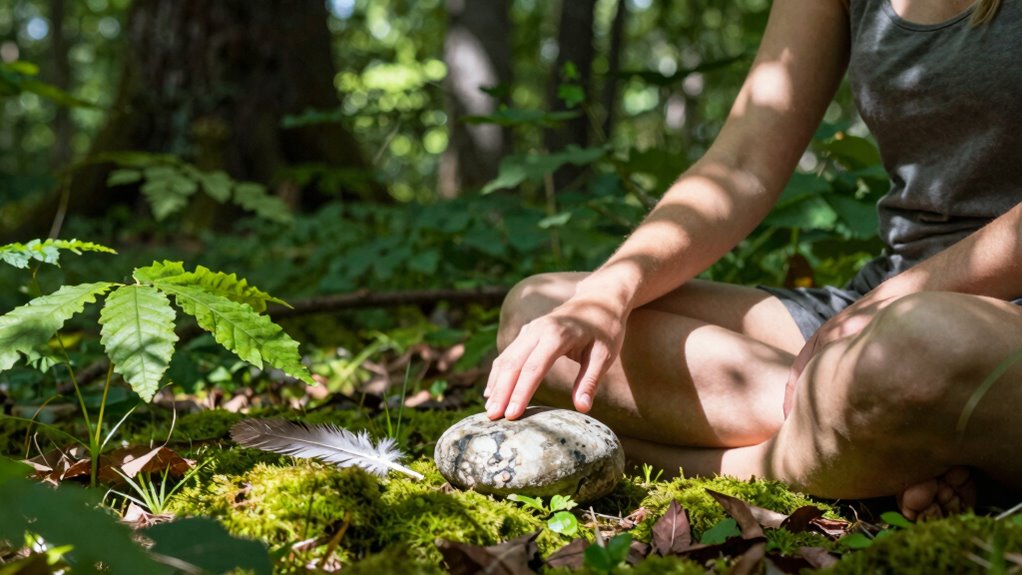
Intuition often feels like a quiet inner voice guiding you through life’s choices, but it’s a skill that can be strengthened with practice. To deepen your intuition without escaping reality, you need to connect more deeply with yourself while staying grounded in the present. One effective way to do this is through mindfulness practices. By intentionally slowing down and paying close attention to your thoughts, sensations, and surroundings, you create space for your intuitive insights to surface. Mindfulness helps you observe your internal dialogue without judgment, making it easier to distinguish genuine intuitive nudges from fleeting thoughts or emotional reactions.
Deepen intuition by practicing mindfulness—pay close attention to thoughts and sensations without judgment.
Alongside mindfulness, developing emotional awareness is vital. When you’re aware of your emotions, you better understand how they influence your decision-making process. Rather than suppressing feelings or letting them overpower your reasoning, observe them with curiosity. Notice how certain emotions—like fear, excitement, or doubt—impact your perceptions. This awareness allows you to filter your emotional responses and recognize when your intuition is guiding you, especially when your feelings align with your deeper values or instincts. Over time, this heightened emotional awareness makes your intuitive signals clearer and more dependable.
Practicing these skills doesn’t mean you have to meditate for hours or isolate yourself from reality. Instead, incorporate small, intentional moments into your daily routine. For instance, during a walk, focus on your breath or the sounds around you. Pay attention to how your body feels in different situations, and reflect on your emotional responses to various events. As you do this regularly, you’ll start noticing subtle cues that your mind might have previously overlooked. These cues often carry valuable insights, especially when you learn to interpret them in the context of your current reality. Additionally, understanding the importance of contrast ratio in visual clarity can help you better appreciate the depth and detail in your perceptions, whether in visual environments or internal awareness. Recognizing the role of sensory perception can also enhance your ability to tune into your intuition more effectively. Developing a mind-body connection also plays a crucial role in strengthening your intuitive abilities by aligning physical sensations with your inner guidance.
Furthermore, cultivating an awareness of internal cues helps you recognize the subtle signals your body and mind send, which are often overlooked but essential for intuitive growth. It’s also important to trust your intuition as you gather more information through mindfulness and emotional awareness. Be patient and gentle with yourself as you develop this skill. Remember that intuition isn’t about making impulsive decisions but about tuning into your inner wisdom while remaining present and engaged with what’s happening around you. Cultivating a deepened awareness of subtle cues can significantly improve your ability to discern genuine intuitive insights from superficial impressions. By consciously practicing mindfulness and emotional awareness, you strengthen your connection to your inner voice without detaching from reality. Over time, you’ll find it easier to navigate complex situations with clarity, confidence, and a deeper understanding of yourself.
As an affiliate, we earn on qualifying purchases.
Frequently Asked Questions
Can Intuition Be Learned or Is It Innate?
Intuition can be both innate and learned. While some innate abilities help you sense things naturally, you can also develop intuition as a learned skill through practice. By paying attention to your feelings, reflecting on your experiences, and trusting your instincts, you strengthen your intuitive abilities. With consistent effort, you turn natural instincts into reliable tools, making intuition a skill you can cultivate rather than just an innate gift.
How Do I Differentiate Intuition From Wishful Thinking?
Ironically, telling apart intuition from wishful thinking is simpler than it sounds. You’ll notice intuition whispers through subtle signals and feels calm, steady, and clear. Wishful thinking, however, often stems from emotional biases, making you cling to fantasies. Trust your gut, but pause to check if your feelings cloud your judgment. When your insights feel rooted in calm clarity, you’re likely on the right track.
Does Deepening Intuition Require Meditation or Mindfulness?
Yes, deepening your intuition benefits from intuitive exercises and emotional awareness. Meditation or mindfulness can help you connect with your inner feelings and develop clarity, but they’re not the only methods. Engaging in activities like journaling, paying attention to gut feelings, or practicing emotional awareness enhances your intuition. These practices allow you to better interpret your inner signals without escaping reality, fostering a deeper, more grounded connection to your instincts.
Can Intuition Help in Making Difficult Decisions?
Yes, intuition can help in making difficult decisions. When you develop emotional awareness and trust your gut feelings, you access valuable insights beyond logic. Your intuition guides you through complex choices by highlighting what truly resonates with your values and emotions. By tuning into your internal signals, you can navigate uncertainty more confidently, making decisions that feel authentic and aligned with your deeper understanding.
How Do I Trust My Intuition in High-Stakes Situations?
Trust your intuition in high-stakes situations by honing your emotional awareness and conducting quick situational analysis. You’ll feel an almost superhuman clarity when your instincts are right, but don’t ignore logical assessment. Take deep breaths to center yourself, acknowledge your feelings without judgment, and weigh the facts calmly. When you combine emotional awareness with clear situational analysis, your intuition becomes a reliable compass, guiding you confidently through even the toughest decisions.
As an affiliate, we earn on qualifying purchases.
Conclusion
So, there you have it—your foolproof guide to sharpening intuition without fleeing to a mystical cave or chanting to the moon. Just trust your gut, ignore the skeptics, and pretend you’re a psychic in training. Who needs facts when you’ve got instincts, right? Remember, the real trick is not escaping reality but embracing it with a smirk, knowing that deep down, you’re secretly a genius—at least until someone calls you out on your “intuitive” guesses.
As an affiliate, we earn on qualifying purchases.
As an affiliate, we earn on qualifying purchases.
Fall Picks
fall essentials
As an affiliate, we earn on qualifying purchases.