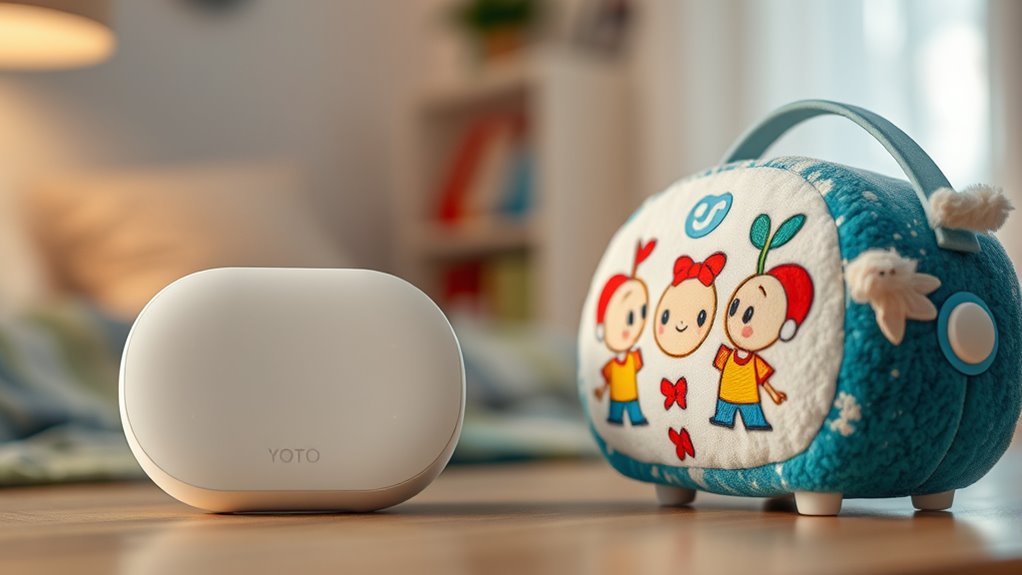

If you’re considering a screen-free, interactive audio device for your child, the options can feel overwhelming. The Yoto Mini (2024 Edition) and Yoto Player (3rd Gen) stand out for their versatility and large content libraries, but the Toniebox offers a different approach with plush, kid-friendly design and simple use. Each has unique strengths, and understanding their tradeoffs is key to choosing the right device for your child’s age and needs.

Turn your quiet moments into listening time
- Thousands of audiobooks, podcasts and originals
- Listen on your phone, tablet or Echo — also offline
- Cancel anytime
Key Takeaways
- The Yoto Mini and Yoto Player are highly customizable with physical cards, but content costs can add up.
- Tonies offers a plush, intuitive design ideal for very young children, with a focus on simplicity.
- Battery life and portability vary; the Yoto Mini is excellent for travel, while the Yoto Player offers longer listening times.
- Content availability and ecosystem are crucial—Yoto devices rely on purchase of cards, while Tonies uses a fixed library of figurines with preloaded stories.
- Safety features like no cameras or microphones make both brands suitable for screen-free environments, but durability considerations differ.
| Yoto Mini (2024 Edition) + Starter Pack for Little Kids Bundle, Ages 3+ |  | Best Portable Audio Device for On-the-Go Kids | Weight: 160 g | Dimensions: 1.57″D x 2.76″W x 2.76″H | Display Technology: pixel display | VIEW ON AMAZON | See Our Full Breakdown |
| Yoto Player (3rd Gen) + Starter Pack for Little Kids Bundle |  | Best All-in-One Screen-Free Audio Player | Color: White | Internal Memory: 32GB | Speaker: 40mm 5W stereo | VIEW ON AMAZON | See Our Full Breakdown |
| Yoto Mini (2024 Edition) – Kids Travel Audio Player, Screen-Free, Ages 3-12 |  | Best Travel Companion for Young Kids | Battery Life: Up to 14 hours | Display: Pixel display | Supported Media: Physical audio cards | VIEW ON AMAZON | See Our Full Breakdown |
| Yoto Player (3rd Gen) – Kids Audio Player, Screen-Free, Ages 3-12 |  | Best Long-Lasting Multi-Function Audio Player | Battery Life: Up to 24 hours | Internal Storage: 32GB | Speaker: 4.37-inch bookshelf | VIEW ON AMAZON | See Our Full Breakdown |
| yoto player vs toniebox review | Battery Life | Weight | Speaker | Connectivity |
|---|---|---|---|---|
| Yoto Mini | Up to 14 hours | 160 g | — | — |
| Yoto Player | Up to 16 hours | — | 40mm 5W stereo | Bluetooth, Wi-Fi |
| Yoto Mini | Up to 14 hours | Lightweight | — | App control |
| Yoto Player | Up to 24 hours | — | 4.37-inch bookshelf | — |
More Details on Our Top Picks
Yoto Mini (2024 Edition) + Starter Pack for Little Kids Bundle, Ages 3+
The Yoto Mini (2024 Edition) is a compact, portable device that excels for travel and active children. It features a pixel display, parental controls, and compatibility with physical audio cards. Compared to the larger Yoto Player, this model is more lightweight and easier for small hands to carry, making it ideal for car rides or outings. However, it relies solely on audio cards, so the content library depends on additional purchases. Its 14-hour battery life is decent but may fall short for longer trips.
Pros:- Child-friendly with parental controls
- Lightweight and portable
- Expands with a large library of audio cards
- Multi-purpose as a storyteller, alarm, or Bluetooth speaker
Cons:- Requires additional purchase of audio cards
- Limited to audio content, no visual features
- Battery life of up to 14 hours may be limiting for long trips
Best for: Parents seeking a portable, screen-free device for children on the move
Not ideal for: Those wanting a device with extensive built-in content or visual media
- Weight:160 g
- Dimensions:1.57″D x 2.76″W x 2.76″H
- Display Technology:pixel display
- Connectivity Technology:Bluetooth
- Supported Media Type:Audio Card
- Battery Life:Up to 14 hours
Our verdict“A versatile, travel-ready option that prioritizes portability and safe listening for young children.”
Yoto Player (3rd Gen) + Starter Pack for Little Kids Bundle
The Yoto Player (3rd Gen) offers a comprehensive experience with a larger screen, nightlight, thermometer, and multiple functions, making it a great choice for kids who enjoy a more interactive device. Its physical controls and app management simplify operation, and the 16-hour battery life supports long use without frequent charging. Content is accessed via physical Yoto cards, which must be purchased separately, and the device isn’t waterproof, limiting outdoor use. Compared to the Mini, it provides a more immersive experience but at a higher price point.
Pros:- Multi-purpose: nightlight, thermometer, alarm clock
- Up to 16 hours of playback
- Child-safe with no cameras or mics
- Large pixel display and easy physical controls
Cons:- Content library relies on additional card purchases
- No waterproof design
- Higher cost for full functionality
Best for: Families wanting a feature-rich, multi-purpose device for home or travel
Not ideal for: Parents seeking a simple, minimal device or those on a strict budget
- Color:White
- Internal Memory:32GB
- Speaker:40mm 5W stereo
- Battery Life:Up to 16 hours
- Connectivity:Bluetooth, Wi-Fi
- Control Method:App, Touch
Our verdict“A feature-packed device suited for children who enjoy a variety of functions and longer battery life, with a focus on safety and ease of use.”
Yoto Mini (2024 Edition) – Kids Travel Audio Player, Screen-Free, Ages 3-12
This version of the Yoto Mini (2024 Edition) emphasizes portability for children aged 3-12. Its long battery life and compact size make it perfect for trips, and the physical card system keeps content simple and screen-free. The device’s app controls add an extra layer of customization, but it still depends on physical audio cards for content, which can be a downside for those looking for a large built-in library. Its durability and ease of use make it a strong choice for active children, though it lacks visual media features.
Pros:- Screen-free and safe for children
- Long battery life (up to 14 hours)
- Suitable for travel and outdoor use
- Easy to operate with physical cards
Cons:- Requires physical cards for content
- No visual or interactive media
- Dependent on app for some controls
Best for: Parents who want a durable, travel-friendly device for children 3-12
Not ideal for: Those preferring devices with extensive built-in content or visual features
- Battery Life:Up to 14 hours
- Display:Pixel display
- Supported Media:Physical audio cards
- Connectivity:App control
- Age Range:3-12+
- Weight:Lightweight
Our verdict“A portable, child-safe device designed for active children who need entertainment on the go without screens.”
Yoto Player (3rd Gen) – Kids Audio Player, Screen-Free, Ages 3-12
The Yoto Player (3rd Gen) is a larger, more durable device with extensive features for children aged 3-12. It boasts a 24-hour battery life, 600+ hours of offline listening, and a range of functions including sleep sounds, nightlight, and alarm clock. Its ease of use with physical cards and app controls makes it ideal for both home and travel, but the device’s plastic enclosure may be less durable for very young children compared to plush alternatives. Without built-in content, it relies on Yoto cards, which adds ongoing costs.
Pros:- Long battery life (up to 24 hours)
- 600+ hours of offline listening
- Multi-purpose: nightlight, alarm, sleep sounds
- Easy controls, app integration
Cons:- Content must be purchased separately
- Plastic enclosure may be less durable for rough use
- No built-in content, relies on external cards
Best for: Families wanting a durable, long-lasting device with rich features for children 3-12
Not ideal for: Parents seeking a plush, tactile experience or those on a tight budget
- Battery Life:Up to 24 hours
- Internal Storage:32GB
- Speaker:4.37-inch bookshelf
- Control Method:Touch, physical dials, app
- Age Range:3-12+
- Waterproof:No
Our verdict“A robust, feature-rich device designed for longevity and versatility, suitable for active children and busy families.”

How We Picked
Our selection process focused on devices that are designed for children’s audio entertainment, emphasizing safety, ease of use, content flexibility, and portability. We compared features such as battery life, content library, parental controls, and device design. Devices had to be suitable for children aged 3-12, with a balance of affordability and functionality. We prioritized devices that are well-reviewed by parents and educators to ensure reliability and value.
| yoto player vs toniebox review | Battery Life | Connectivity | Control Method |
|---|---|---|---|
| Yoto Mini | Up to 14 hours | — | — |
| Yoto Player | Up to 16 hours | Bluetooth, Wi-Fi | App, Touch |
| Yoto Mini | Up to 14 hours | App control | — |
| Yoto Player | Up to 24 hours | — | Touch, physical dials, app |
Factors to Consider When Choosing Yoto Player Vs Toniebox Review
Choosing between Yoto devices and Tonieboxes depends on your child’s age, your priorities for content, and how you want them to interact with audio entertainment. Key considerations include portability, content ecosystem, safety features, and design preferences. Understanding these factors helps ensure you select a device that grows with your child’s needs and fits your family’s lifestyle.
Content Ecosystem and Library
Yoto devices rely on physical audio cards, which offer a wide and growing library of stories, music, and educational content. This setup allows for customization but may incur ongoing costs as new cards are purchased. In contrast, Tonieboxes come with a fixed library of preloaded stories and songs, which simplifies content management but limits flexibility and additional content options.
Design and Durability
The Toniebox features a plush, soft exterior, making it highly appealing and safe for very young children. It’s designed for easy handling and durability, especially for toddlers. Yoto devices tend to have plastic enclosures that are more susceptible to damage but offer more versatility in functions and content. Consider your child’s age and activity level when choosing the right form factor.
Portability and Power
If portability is a priority, the Yoto Mini is an excellent choice with its lightweight design and long battery life, perfect for travel. The larger Yoto Player offers longer usage and more features but is less compact. Tonieboxes are generally stationary but are easy to carry around thanks to their soft design, suitable for travel within a home or on short trips.
Safety and Parental Controls
Both brands prioritize safety, avoiding cameras and microphones. Yoto devices incorporate parental controls and app management, giving parents oversight over content and usage. Tonieboxes are straightforward, with minimal controls, making them ideal for very young children who need simple, safe devices that don’t require ongoing management.
Frequently Asked Questions
Are Yoto and Toniebox devices suitable for very young children?
Yes, both brands are designed with safety in mind, avoiding cameras and microphones. The Toniebox, with its plush exterior and simple controls, is especially appealing for toddlers and preschoolers, while Yoto devices offer parental controls and a wide range of content, making them suitable for children from age 3 and up. The choice depends on whether you prefer a plush toy or a more feature-rich device.
Can I add my own content to these devices?
Yoto devices allow you to purchase or create your own audio cards, giving a high level of customization. You can also use the Yoto app to manage content. Tonieboxes, on the other hand, come with a fixed library of preloaded stories and songs, and you cannot add custom content unless you purchase additional Tonies with preloaded media. For flexibility, Yoto is the better choice.
Which device is better for travel?
The Yoto Mini and Yoto Mini (2024 Edition) stand out for their portability, lightweight design, and long battery life, making them ideal for trips. The larger Yoto Player offers longer playback but is less portable. Tonieboxes are also portable thanks to their soft, plush exterior, but they are less compact and more suited for indoor use or short trips within a familiar environment.
How do the content libraries compare?
Yoto devices depend on physical audio cards, which provide a vast and expanding library of stories, music, and educational content, though additional purchases are needed for new cards. Tonieboxes come with a curated, fixed library of stories and songs embedded in the figurines, offering simplicity but less variety. Your choice depends on whether you prefer flexibility or a set library.
Are these devices durable enough for active children?
Tonies are built with a soft, plush exterior that withstands rough handling, making them ideal for very young children. Yoto devices, typically made of plastic, are more susceptible to damage but offer greater functionality. For active toddlers, Tonies might be more suitable, while older children can benefit from the versatility of Yoto devices.
Conclusion
For parents seeking a simple, durable device for very young children, the Tonies box offers a plush, easy-to-use experience with a curated library. Families wanting more control over content and a device that can grow with their child should consider the Yoto Player (3rd Gen) or Mini. The Yoto options are better suited for active children, travel, and customization, while Tonies prioritize ease of use and safety for the youngest users.