

Spiritual growth journals work best when their structure matches your habit — and that’s the single biggest tradeoff in this category. After comparing twelve options across prompt quality, structure, and faith-specific fit, Journaling for Spiritual Growth: Six Weeks to Build a Habit stands out as the best overall pick because its time-boxed six-week program turns intention into an actual routine. If you want a faith-anchored option instead, 100 Days of Believing Bigger delivers the strongest devotional content in the lineup, while My Spiritual Journey wins on flexibility for readers who don’t want a daily obligation. The main tension you’ll face: heavily guided journals keep you consistent but can feel restrictive, while open-format options offer freedom but demand more self-discipline. Keep reading for the full breakdown of all twelve.

Turn your quiet moments into listening time
- Thousands of audiobooks, podcasts and originals
- Listen on your phone, tablet or Echo — also offline
- Cancel anytime
Key Takeaways
- Structured, time-boxed programs (six-week and 100-day formats) consistently outperformed open-ended journals for building a lasting habit — the top three picks all impose a finish line.
- Half the lineup is explicitly Christian; only a handful work for secular, metaphysical, or multi-faith readers, so tradition fit matters more here than in most journal categories.
- Unlined and undated formats ranked lower for beginners despite their flexibility, because the blank pages shift the burden of consistency onto the writer.
- Prompt quality varied more than any other factor: the best journals ask questions that build on previous weeks, while weaker ones repeat near-identical daily prompts.
- Devotional journals with scripture content cost roughly the same as prompt-only journals, making them the better value if you want reading material alongside writing space.
| Gratitude: A Day and Night Reflection Journal (Inner World) |  | Best for Daily Ritual | Format: Guided journal, day and night entries | Prompt style: Structured morning and evening reflection prompts | Focus: Gratitude and mindfulness | VIEW LATEST PRICE | See Our Full Breakdown |
| God, I’m Ready!: A Spiritual Growth Journal (With Prompts, No Lines) |  | Best for Freeform Faith Journaling | Format: Prompt-based journal, unlined pages | Prompt style: Spiritual growth prompts, freeform response space | Focus: Christian faith and self-reflection | VIEW LATEST PRICE | See Our Full Breakdown |
| Spiritual Growth Journal: Walk In Your Destiny |  | Best for Purpose-Focused Reflection | Format: Guided journal with prompts and exercises | Prompt style: Reflective prompts plus active exercises | Focus: Spiritual destiny and purpose | VIEW LATEST PRICE | See Our Full Breakdown |
| Journal Keeping: Writing for Spiritual Growth |  | Best Companion Guide (Not a Journal) | Format: Book on journaling practice (read, not written in) | Content type: Guidance and techniques for spiritual journal writing | Focus: Spiritual formation through reflective writing | VIEW LATEST PRICE | See Our Full Breakdown |
| Spiritual Growth: Guided Journal for All Things Metaphysical | 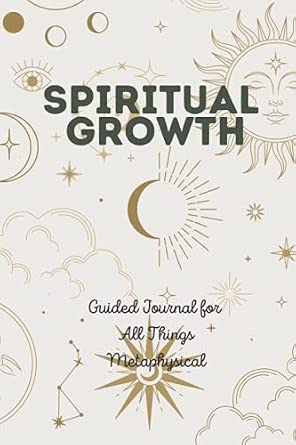 | Best for Metaphysical Exploration | Format: Guided journal with prompts and exercises | Prompt style: Metaphysical and spiritual exploration prompts | Focus: Metaphysical spirituality and self-discovery | VIEW LATEST PRICE | See Our Full Breakdown |
| Spiritual Awakening Journal: Daily Reflections to Attract Positivity and Reconnect with Your Truest Self |  | Best for Daily Positivity Practice | Format: Guided journal with daily reflection prompts | Focus: Positivity, authenticity, self-discovery | Structure: Daily entries with prompts and free space | VIEW LATEST PRICE | See Our Full Breakdown |
| Journaling for Spiritual Growth: Six Weeks to Build a Habit That Fosters Spiritual and Emotional Maturity |  | Best Structured Program | Format: Program-style journaling book with exercises | Duration: Six-week guided program | Focus: Spiritual maturity, emotional growth, mindfulness | VIEW LATEST PRICE | See Our Full Breakdown |
| 100 Days of Believing Bigger: A Devotional Journal – 100 Daily Devotions to Help You Discover Your True Identity in Christ |  | Best Christian Devotional | Format: Devotional journal | Length: 100 daily devotions | Focus: Christian identity in Christ, faith and self-discovery | VIEW LATEST PRICE | See Our Full Breakdown |
| The 5-Minute Bible Study Journal for Women: Mornings in God’s Word |  | Best for Busy Mornings | Format: Daily devotional journal for women | Time per entry: Approximately 5 minutes | Focus: Morning scripture reading and reflection | VIEW LATEST PRICE | See Our Full Breakdown |
| My Spiritual Journey: A Guided Journal with Questions and Reflections to Light Your Path |  | Best Open-Ended Reflection | Format: Guided journal with questions and reflections | Focus: Self-reflection, gratitude, spiritual exploration | Structure: Undated, open-ended prompts | VIEW LATEST PRICE | See Our Full Breakdown |
| Manifestation Journal: The Miracle Journal for Spiritual Growth, 5-Min Guided Daily Journal for Women & Men with Affirmations & Prompts, Undated & Minimalistic |  | Best for Law of Attraction Beginners | Format: Guided daily journal with affirmations and prompts | Daily time commitment: Approximately 5 minutes per entry | Dating: Undated for flexible use | VIEW LATEST PRICE | See Our Full Breakdown |
| Spiritual Formation Journal: A Personal Growth Guide |  | Best for Structured Faith Formation | Format: Guided journal with reflective prompts and exercises | Structure: Progressive personal growth guide | Spiritual focus: Faith-based spiritual formation | VIEW LATEST PRICE | See Our Full Breakdown |
| spiritual growth journal | Format | Audience | Focus | Guidance level |
|---|---|---|---|---|
| Gratitude: A Day and Night Ref | Guided journal, day and night entries | General, faith-neutral | Gratitude and mindfulness | — |
| God | Prompt-based journal, unlined pages | — | Christian faith and self-reflection | Prompts only, minimal instruction |
| Spiritual Growth Journal: Walk | Guided journal with prompts and exercises | General spiritual/faith-oriented readers | Spiritual destiny and purpose | Moderate — structured but self-paced |
| Journal Keeping: Writing for S | Book on journaling practice (read, not written in) | Christian and contemplative readers | Spiritual formation through reflective writing | High — instructional throughout |
| Spiritual Growth: Guided Journ | Guided journal with prompts and exercises | Non-religious, metaphysically inclined readers | Metaphysical spirituality and self-discovery | Guided prompts with occasional exercises |
| Spiritual Awakening Journal: D | Guided journal with daily reflection prompts | General/adult, faith-neutral | Positivity, authenticity, self-discovery | — |
| Journaling for Spiritual Growt | Program-style journaling book with exercises | Adults seeking structured spiritual development | Spiritual maturity, emotional growth, mindfulness | — |
| 100 Days of Believing Bigger: | Devotional journal | Christian women | Christian identity in Christ, faith and self-discovery | — |
| The 5-Minute Bible Study Journ | Daily devotional journal for women | Christian women | Morning scripture reading and reflection | — |
| My Spiritual Journey: A Guided | Guided journal with questions and reflections | General/adult, faith-neutral | Self-reflection, gratitude, spiritual exploration | — |
| Manifestation Journal: The Mir | Guided daily journal with affirmations and prompts | Women and men | — | Daily prompts and affirmations |
| Spiritual Formation Journal: A | Guided journal with reflective prompts and exercises | Readers seeking spiritual maturity | — | Structured prompts and exercises |
More Details on Our Top Picks
Gratitude: A Day and Night Reflection Journal (Inner World)
Among the spiritual growth journals in this roundup, this one stands out for twice-daily structure — morning and evening prompts that anchor gratitude at both ends of the day. Compared with God, I’m Ready!, which leaves the page wide open, this journal does the deciding for you: every spread tells you exactly what to write and when. That rigidity is the point, but it’s also the tradeoff. Buyers who want to wrestle with big faith questions or explore metaphysical themes — the territory covered by Spiritual Growth: Guided Journal for All Things Metaphysical — will find the scope here narrow. The gratitude-only focus builds a durable habit fast, though the paper quality and binding are not well documented, so durability is a gamble for daily, long-term use.
Pros:- Twice-daily structure makes consistency nearly automatic
- Prompts are specific enough to finish entries in minutes
- Gratitude focus is backed by well-established mindfulness practice
- Compact format suits nightstand or travel use
Cons:- Narrow topical focus — no room for doubt, struggle, or deeper theological questions
- Paper quality and binding are undocumented, a real risk for a daily-use journal
Best for: Busy people who want a low-effort, five-minute morning and evening gratitude ritual that requires zero creative decisions
Not ideal for: Writers who want open-ended spiritual exploration — the fixed prompts and gratitude-only scope will feel repetitive within a few weeks
- Format:Guided journal, day and night entries
- Prompt style:Structured morning and evening reflection prompts
- Focus:Gratitude and mindfulness
- Audience:General, faith-neutral
- Use case:Short daily entries
- Entry structure:Fixed daily spreads
Our verdict“This is the pick for anyone whose main obstacle to journaling is deciding what to write — the day/night prompts remove every excuse.”
God, I’m Ready!: A Spiritual Growth Journal (With Prompts, No Lines)
The unlined pages are what separate this journal from everything else here. Where Gratitude: A Day and Night Reflection Journal hands you a fill-in-the-blank structure, God, I’m Ready! gives a prompt and then gets out of the way — room to doodle, pray in ink, mind-map, or write sideways. Compared with Spiritual Growth Journal: Walk In Your Destiny, the guided-exercise feel is lighter; this is closer to a conversation starter than a curriculum. The tradeoff is real: blank pages punish perfectionists. If your handwriting drifts or you freeze at open space, the structure of a lined, dated journal like Journaling for Spiritual Growth: Six Weeks will serve you better. There’s also little supporting content beyond the prompts, so it works best for people who already pray or reflect regularly.
Pros:- Unlined pages allow sketches, diagrams, and freeform prayer writing
- Prompts point toward faith and self-reflection without dictating answers
- No dates, so you can skip days without guilt
- Suits multiple writing styles and tools, including markers
Cons:- Almost no instructional content — you bring your own spiritual discipline
- Blank pages are hard to keep organized or revisit later
Best for: Practicing Christians who dislike ruled lines and want prompt-based but visually free space for prayers, sketches, and notes
Not ideal for: Beginners who need scaffolding — no lines plus minimal guidance is intimidating if you’ve never kept a spiritual journal before
- Format:Prompt-based journal, unlined pages
- Prompt style:Spiritual growth prompts, freeform response space
- Focus:Christian faith and self-reflection
- Page type:No ruled lines
- Dating:Undated entries
- Guidance level:Prompts only, minimal instruction
Our verdict“Choose this if you treat journaling as open dialogue with God rather than an assignment — and skip it if blank space paralyzes you.”
Spiritual Growth Journal: Walk In Your Destiny
This journal’s angle is calling and destiny — it doesn’t just ask how you’re feeling, it asks where you’re headed. That gives it a sharper identity than generalist options like My Spiritual Journey: A Guided Journal, which spreads across the whole spiritual path. The included prompts plus exercises put it a step above pure prompt books; compared with God, I’m Ready!, there’s more of a program to work through rather than loose questions. The honest drawback: as a newer, lesser-known title, it has no review history and sparse published detail, so you’re buying on premise rather than proof. If you want a battle-tested structure, the day-night format of Gratitude: A Day and Night Reflection Journal is the safer bet. But for readers in a season of questioning their direction, this focus is hard to find elsewhere in the lineup.
Pros:- Purpose-and-destiny focus fills a gap most gratitude journals leave open
- Combines reflection prompts with active exercises, not just questions
- Works as a self-directed mini-program over weeks
- Faith framing without heavy denominational language
Cons:- No customer reviews to validate the prompt quality
- Binding, page count, and layout details are not published
Best for: People in a transitional life season — career change, graduation, retirement — who want journaling aimed at discerning purpose
Not ideal for: Buyers who rely on reviews before purchasing — the title is new with no feedback and thin public specs
- Format:Guided journal with prompts and exercises
- Prompt style:Reflective prompts plus active exercises
- Focus:Spiritual destiny and purpose
- Audience:General spiritual/faith-oriented readers
- Guidance level:Moderate — structured but self-paced
- Entry structure:Thematic exercises
Our verdict“A purpose-driven choice for readers actively seeking direction, provided they’re comfortable buying a journal with no track record.”
Journal Keeping: Writing for Spiritual Growth
Here’s the honest catch: this is a book about journaling, not a journal. It’s the only entry in this roundup you read rather than write in, and that distinction is exactly why it earns a slot. If you’ve bought prompt books like Gratitude: A Day and Night Reflection Journal and abandoned them after a week, this title addresses the failure point — how to sustain a journaling practice — with technique and guidance instead of blank pages. Paired with God, I’m Ready! or any unlined blank book, it functions as the instruction manual those products lack. The tradeoff is obvious: buy this alone and you still have nothing to write in. It also skews toward a reflective, contemplative Christian audience, so readers chasing metaphysical or manifestation content should look to the metaphysical guided journal instead.
Pros:- Teaches sustainable journaling technique, not just prompts
- Strong fit for contemplative Christian spiritual formation
- Excellent companion to any blank or unlined journal in this list
- Addresses motivation and habit, the real reasons journals get abandoned
Cons:- Not a usable journal — requires pairing with an actual notebook
- Faith perspective is specific and may not suit secular or metaphysical readers
Best for: Reflective readers and journaling beginners who want to understand the why and how of spiritual journaling before committing to a guided journal
Not ideal for: Anyone who just wants pages and prompts today — there’s nothing to write in, and it requires reading time before any journaling starts
- Format:Book on journaling practice (read, not written in)
- Content type:Guidance and techniques for spiritual journal writing
- Focus:Spiritual formation through reflective writing
- Audience:Christian and contemplative readers
- Use case:Companion to a separate journal
- Guidance level:High — instructional throughout
Our verdict“Buy this as the method book alongside whichever journal you choose — it’s the teaching layer the other products don’t provide.”
Spiritual Growth: Guided Journal for All Things Metaphysical
Every other journal in this lineup carries either a gratitude or explicitly Christian frame; this one is the only metaphysical option, which alone justifies its place. Prompts lean into energy, intuition, and metaphysical practice, making it the natural home for readers who would feel alienated by God, I’m Ready! or the devotional tone of 100 Days of Believing Bigger. Compared with Manifestation Journal: The Miracle Journal, which narrows to affirmations and five-minute daily entries, this spreads wider — exploration over routine. That breadth is both its strength and its weakness: the coverage is broad rather than deep on any single practice, and like several smaller titles here, it ships with no reviews and minimal published specs. Buyers wanting paper heftier than standard stock, or who use fountain pens or markers, should verify quality expectations before ordering.
Pros:- Only genuinely metaphysical-focused journal in this category of the roundup
- Prompts encourage self-discovery beyond routine daily check-ins
- Welcoming to beginners exploring spirituality outside organized religion
- Guided format still provides enough structure to start writing immediately
Cons:- Broad coverage means shallow treatment of any single metaphysical practice
- No reviews and sparse specs — paper and binding quality are unknown
Best for: Readers exploring crystals, energy work, intuition, and other metaphysical practices who want prompts matching that worldview
Not ideal for: Devotional Christians and structure-lovers — the metaphysical framing won’t resonate, and broad prompts lack the day-night discipline of Gratitude: A Day and Night Reflection Journal
- Format:Guided journal with prompts and exercises
- Prompt style:Metaphysical and spiritual exploration prompts
- Focus:Metaphysical spirituality and self-discovery
- Audience:Non-religious, metaphysically inclined readers
- Guidance level:Guided prompts with occasional exercises
- Entry structure:Topical, exploration-based
Our verdict“The clear choice if your spiritual path runs through the metaphysical rather than the devotional — just temper expectations on depth.”
Spiritual Awakening Journal: Daily Reflections to Attract Positivity and Reconnect with Your Truest Self
This option stands out for its positivity-first framing, which separates it from prompt-heavy alternatives like My Spiritual Journey. Instead of open-ended questions that can stall a beginner, this journal nudges the writer toward daily affirmations and mindset shifts, making it a good match for someone who wants momentum rather than introspective depth. Compared with the Manifestation Journal elsewhere in this roundup, the approach here is broader — less about goals, more about reconnecting with your authentic self. The tradeoff is real, though: with little published detail on page count or format, buyers are choosing on promise rather than specs, and there are no customer reviews yet to lean on. Skip it if you need a structured program; the six-week Journaling for Spiritual Growth offers far more scaffolding.
Pros:- Encourages a quick, sustainable daily reflection habit
- Positivity framing lowers the barrier for journaling newcomers
- Guided prompts reduce blank-page paralysis
- Works for any spiritual background, not one tradition
Cons:- Almost no published specs on size, length, or format
- No customer reviews to verify quality
- Lighter on depth than program-based journals in this roundup
Best for: Beginners who want a low-pressure daily habit built around positive thinking rather than hard inner work
Not ideal for: Buyers who want structure or accountability — there’s no program, and sparse product info makes it a leap of faith
- Format:Guided journal with daily reflection prompts
- Focus:Positivity, authenticity, self-discovery
- Structure:Daily entries with prompts and free space
- Audience:General/adult, faith-neutral
- Spiritual approach:Non-denominational, self-development oriented
- Customer ratings:Not yet available
Our verdict“A reasonable pick if you want an easy, affirmation-leaning daily journal — but verify format details before buying.”
Journaling for Spiritual Growth: Six Weeks to Build a Habit That Fosters Spiritual and Emotional Maturity
Most journals in this category give you prompts and wish you luck. This one builds an actual six-week curriculum, which makes it the closest thing to a coached experience on this list. Compared with the Spiritual Awakening Journal, the difference is commitment: this book asks for sustained effort across exercises designed to build emotional maturity, not just daily feel-good entries. That structure is exactly why it ranks here — habit formation is the hardest part of journaling, and a week-by-week plan solves it. The flip side: six weeks of required consistency will defeat anyone who journals sporadically, and the format details (workbook versus journal, how much writing space) are thin. If you want something you can pick up and put down freely, the My Spiritual Journey journal is more forgiving.
Pros:- Week-by-week structure builds a lasting habit
- Practical exercises, not just writing prompts
- Targets emotional maturity alongside spiritual growth
- Clear beginning and end create a sense of completion
Cons:- Demands six weeks of consistent effort
- Sparse detail on format and writing space
- Less flexible than open-ended guided journals
Best for: Self-disciplined readers who want a guided program and measurable progress over six weeks
Not ideal for: Chaotic schedulers — the program’s value collapses if you can’t commit to consecutive weeks
- Format:Program-style journaling book with exercises
- Duration:Six-week guided program
- Focus:Spiritual maturity, emotional growth, mindfulness
- Structure:Weekly progression with reflections and exercises
- Audience:Adults seeking structured spiritual development
- Spiritual approach:Broadly applicable, non-denominational
- Customer ratings:Limited information available
Our verdict“The best choice on this list if you genuinely want a program, provided you can commit to the full six weeks.”
100 Days of Believing Bigger: A Devotional Journal – 100 Daily Devotions to Help You Discover Your True Identity in Christ
Where the Spiritual Awakening Journal keeps faith vague, this one is unapologetically Christ-centered — and that specificity is its strength. The 100-day devotional arc centered on identity in Christ gives it more theological spine than the shorter, quicker 5-Minute Bible Study Journal, trading brevity for depth over a longer commitment. This pick makes the most sense for Christian women who want devotion plus reflection space in one volume, and it doubles well as a meaningful gift, something few journals in this roundup can claim. The tradeoffs: it is written for a specific audience, so anyone outside that faith will get nothing from it, and format details like page weight and writing room are thinly documented. If five minutes a day is all you have, the 5-Minute journal fits better.
Pros:- Substantial 100-day devotional arc with journaling built in
- Focused theme of identity in Christ gives cohesion
- Strong gift appeal for Christian women
- Deeper than five-minute-format devotionals
Cons:- Faith-specific — unusable outside a Christian framework
- Limited published info on size and writing space
- Longer daily commitment than quick-study alternatives
Best for: Christian women wanting a longer daily devotional with journaling space, or gift-givers shopping for one
Not ideal for: Non-Christian readers or those wanting quick entries — 100 days of devotions is a real time commitment
- Format:Devotional journal
- Length:100 daily devotions
- Focus:Christian identity in Christ, faith and self-discovery
- Audience:Christian women
- Spiritual approach:Explicitly Christian
- Gift suitability:Marketed as a meaningful gift
- Daily time required:Moderate daily devotion
Our verdict“The standout faith-forward option here, provided a 100-day Christ-centered devotional matches your beliefs and schedule.”
The 5-Minute Bible Study Journal for Women: Mornings in God’s Word
The core promise here is realistic time management — five minutes a morning — and that constraint is the whole product. Compared with 100 Days of Believing Bigger, this journal trades depth for doability: you get scripture, a short reflection, and just enough space to write before the coffee gets cold. That makes it the most schedule-proof faith journal in this roundup, ideal for mothers or early-commute professionals who have abandoned longer devotionals before. The honest drawback is that brevity cuts both ways. The limited writing space frustrates anyone who processes through longer journaling, and there’s little room for the deeper theological exploration that the six-week Journaling for Spiritual Growth program provides. Treat it as a consistency tool, not a study tool, and it earns its place.
Pros:- Genuinely fits into a crowded morning routine
- Builds Bible-reading consistency through small daily wins
- Morning scripture focus sets a clear daily rhythm
- Lower commitment than 100-day or six-week programs
Cons:- Constrained writing space limits reflection depth
- Not designed for detailed theological study
- Narrowly aimed at women, limiting audience
Best for: Busy Christian women who want a morning scripture habit they can actually keep
Not ideal for: Deep-study-oriented readers — five minutes and short answer space won’t support serious theological work
- Format:Daily devotional journal for women
- Time per entry:Approximately 5 minutes
- Focus:Morning scripture reading and reflection
- Audience:Christian women
- Spiritual approach:Christian, Bible-based
- Best use time:Morning routine
- Writing space:Compact — built for brief responses
Our verdict“If your spiritual life is squeezed into five-minute windows, this is the most honest option on the list.”
My Spiritual Journey: A Guided Journal with Questions and Reflections to Light Your Path
This journal earns its slot by sitting in the flexible middle ground: more guided than a blank notebook, far less rigid than the six-week Journaling for Spiritual Growth program. Its strength is thoughtful, open-ended questioning paired with gratitude practice — you can open to any page, any day, in any mood, which the dated or program-based options here don’t allow. Compared with the Spiritual Awakening Journal, the prompts here lean more contemplative and less affirmation-driven, making this the better fit for people who want to sit with hard questions rather than reinforce positivity. The downsides mirror its lack of structure: no built-in habit mechanism means motivation is entirely on you, and like several newer entries in this roundup, it has no customer reviews and thin published specs. Beautiful design helps, but doesn’t replace discipline.
Pros:- Dip-in, dip-out format with no dated pressure
- Prompts encourage gratitude alongside deeper questioning
- Attractive design supports long-term use
- Works across spiritual traditions
Cons:- No structure or accountability to sustain a habit
- No customer reviews or detailed specs available
- Open prompts can feel aimless for beginners
Best for: Reflective journalers who want meaningful prompts without a schedule or program dictating pace
Not ideal for: Habit-builders who need structure — without dates or a program, consistency is entirely self-driven
- Format:Guided journal with questions and reflections
- Focus:Self-reflection, gratitude, spiritual exploration
- Structure:Undated, open-ended prompts
- Audience:General/adult, faith-neutral
- Spiritual approach:Non-denominational
- Design emphasis:Beautifully designed interior
- Customer ratings:Not yet available
Our verdict“The right pick for self-motivated journalers who value freedom over structure — everyone else should grab a program or dated journal.”
Manifestation Journal: The Miracle Journal for Spiritual Growth, 5-Min Guided Daily Journal for Women & Men with Affirmations & Prompts, Undated & Minimalistic
Most journals in this roundup lean heavily into either gratitude, like Gratitude: A Day and Night Reflection Journal, or scripture, like 100 Days of Believing Bigger. This option carves out a different niche: it’s built around affirmations and manifestation prompts, which makes it the strongest fit for buyers drawn to law-of-attraction practice rather than traditional devotion. The five-minute daily format means the barrier to entry is low — a real advantage over more demanding options like Journaling for Spiritual Growth: Six Weeks to Build a Habit, which asks for a bigger weekly commitment. Being undated removes the guilt of missed days, though that same freedom can work against beginners who need external structure to stay consistent. The minimalist design will please anyone overwhelmed by illustrated layouts, but the sparse presentation offers little guidance if you stall mid-practice.
Pros:- Undated format removes pressure and lets you pause without wasting pages
- Five-minute entries fit into even the busiest morning routine
- Affirmation-based prompts suit manifestation and positivity practices
- Gender-neutral minimalist design works for a wide range of users
Cons:- Prompts are brief and may feel repetitive for experienced journalers
- Thin supplemental content means little support if your practice stalls
Best for: Law-of-attraction newcomers who want a quick, low-pressure daily ritual without religious framing
Not ideal for: Buyers who want deep reflective structure or faith-based content — the prompts stay surface-level
- Format:Guided daily journal with affirmations and prompts
- Daily time commitment:Approximately 5 minutes per entry
- Dating:Undated for flexible use
- Design style:Minimalistic
- Audience:Women and men
- Spiritual focus:Manifestation and spiritual growth
- Guidance level:Daily prompts and affirmations
Our verdict“Pick this if you want a fast, flexible manifestation ritual; skip it if you need in-depth reflective structure or spiritual depth.”
Spiritual Formation Journal: A Personal Growth Guide
Where the Manifestation Journal keeps things quick and affirmation-driven, this option takes the opposite approach: it’s a structured formation guide built around reflective exercises designed to deepen an existing faith practice. Compared with God, I’m Ready!: A Spiritual Growth Journal, which uses open, line-free prompting, this journal leans more prescriptive — a plus for readers who want a clear progression rather than blank-space freedom. It also sits closer to devotional territory than Spiritual Growth: Guided Journal for All Things Metaphysical, so it’s a poor match for anyone exploring non-religious spirituality. The tradeoff is density: the exercises demand genuine time and honesty, so casual journalers who liked the five-minute habit of the Manifestation Journal may find this commitment-heavy. Sparse publisher detail also means you’re buying partly on faith about page count and materials.
Pros:- Structured exercises create a genuine progression rather than random entries
- Reflective prompts push beyond surface-level journaling
- Supports building a consistent long-term spiritual practice
- Works well as a companion to an existing faith routine
Cons:- Requires meaningful time and honesty — not a low-effort daily habit
- Minimal published detail on length, materials, or layout
Best for: Practicing believers who want a progressive, exercise-based path to deeper spiritual maturity
Not ideal for: Casual or secular journalers — the faith framing and exercise load assume real commitment
- Format:Guided journal with reflective prompts and exercises
- Structure:Progressive personal growth guide
- Spiritual focus:Faith-based spiritual formation
- Guidance level:Structured prompts and exercises
- Time commitment:Moderate to substantial per entry
- Best used as:Companion to an ongoing faith practice
- Audience:Readers seeking spiritual maturity
Our verdict“Choose this if you want a disciplined, faith-centered formation process rather than quick daily affirmations.”

How We Picked
I evaluated each journal against four criteria that directly affect whether a spiritual journal actually gets used: structure and habit design (does it have a program, timeline, or daily format that sustains momentum?), prompt depth (do the questions progress over time or repeat?), tradition fit (is it Christian, metaphysical, or tradition-neutral, and how clearly does it say so?), and physical usability (paper quality, layout, portability, and whether the format suits daily vs. occasional writing).
The ranking rewards journals that solve the real failure point in this category — abandonment within the first few weeks. That’s why time-boxed programs like Journaling for Spiritual Growth and 100 Days of Believing Bigger rank above beautiful-but-open-ended options, and why guidebooks like Journal Keeping: Writing for Spiritual Growth are positioned for a different buyer entirely: someone who wants to learn journaling as a practice rather than fill one in.
| spiritual growth journal | Guidance level |
|---|---|
| Gratitude: A Day and Night Ref | — |
| God | Prompts only, minimal instruction |
| Spiritual Growth Journal: Walk | Moderate — structured but self-paced |
| Journal Keeping: Writing for S | High — instructional throughout |
| Spiritual Growth: Guided Journ | Guided prompts with occasional exercises |
| Spiritual Awakening Journal: D | — |
| Journaling for Spiritual Growt | — |
| 100 Days of Believing Bigger: | — |
| The 5-Minute Bible Study Journ | — |
| My Spiritual Journey: A Guided | — |
| Manifestation Journal: The Mir | Daily prompts and affirmations |
| Spiritual Formation Journal: A | Structured prompts and exercises |
Factors to Consider When Choosing Spiritual Growth Journals
Choosing a spiritual growth journal fails most often not because of quality but because of mismatch — the wrong structure, the wrong tradition, or the wrong daily time commitment. These are the factors that actually separate a journal you finish from one that sits on a shelf.
Guided Prompts vs. Open Pages
The most common mistake buyers make is assuming more freedom is better. Guided journals with structured prompts dramatically outperform blank formats for beginners because they remove the blank-page paralysis that kills most journaling habits within two weeks. Open formats like God, I’m Ready! (prompts, no lines) suit experienced journalers who already know what they want to write and resent being boxed in. A useful test: if you’ve abandoned journals before, go more structured, not less. If you’ve filled multiple notebooks, a lighter scaffold will feel less like homework. The tradeoff is real in both directions — structure can start to feel formulaic around week four, which is why the top picks vary their prompts progressively rather than repeating a daily template.
Match the Journal to Your Faith Tradition
This category splits cleanly into explicitly Christian journals, metaphysical/manifestation journals, and tradition-neutral options — and buying the wrong one is the most common source of returns. Journals like 100 Days of Believing Bigger and The 5-Minute Bible Study Journal are built entirely around scripture and Christian identity; a secular buyer will find them unusable. Conversely, a devout Christian buyer may find the affirmations and manifestation language in options like The Miracle Journal misaligned with their practice. Read the product description and sample pages for language cues: scripture references, references to God or Christ, affirmations, energy, or universal spirit. Tradition-neutral options like My Spiritual Journey use inclusive language and work across faiths — the safest choice if the journal is a gift.
Time Commitment and Program Length
Journals in this lineup range from five-minute daily entries to open-ended, undated formats, and honestly estimating your available time matters more than any other single decision. A 100-day devotional with substantial daily content will overwhelm someone with ten spare minutes each morning, while a minimal five-minute format will under-serve someone wanting deep reflection. Time-boxed programs (six weeks, 100 days) create urgency and a finish line, which research on habit formation supports — but they also create guilt when you miss days. Undated journals solve the guilt problem but remove the momentum. If your schedule is erratic, undated formats like The Miracle Journal make more sense than dated programs; if you thrive on streaks, pick a dated challenge format.
Dated vs. Undated Formats
A dated journal started in March wastes four months of pages — a small but real cost, both financial and psychological. Undated formats let you start any day of the year and skip guilt-free, which is why they’re better for inconsistent journalers. Dated formats, on the other hand, create accountability: an empty page stares back at you. Some buyers intentionally choose dated editions as commitment devices. Consider also when you’re buying — a dated devotional journal bought as a November gift may sit unused until January. If gifting, undated is almost always the safer choice unless the recipient has specifically requested a dated challenge like a 100-day program.
Physical Quality and Portability
A journal you carry daily needs lay-flat binding, decent paper weight, and a size that fits your bag or nightstand. Thick paper matters if you write with fountain pens or markers; thin paper bleeds through and ruins the reflection on the next page. Portability is genuinely decision-relevant here — morning-practice journals can be larger and stay home, while commute or travel journals should be compact. Hardcover editions survive nightly nightstand use better than paperbacks but cost more and weigh down a bag. Don’t overpay for gift-book aesthetics if the journal will live in a drawer; conversely, a journal you display openly can double as a visual reminder to actually use it.
When to Pay More — and When Not To
Price in this category mostly tracks production quality and brand, not prompt quality — some of the best prompt progressions in this roundup sit in inexpensive, plainly produced journals. Paying more makes sense when you want a keepsake format you’ll re-read in five years, durable binding for daily handling, or bundled devotional content that replaces a separate book. It doesn’t make sense when you’re testing whether journaling works for you at all — start cheap and structured, then upgrade once you’ve proven the habit. The one premium feature that consistently earns its price is genuinely progressive content: a journal whose week-six prompts build on week-one insights is doing something a generic prompt list cannot. Also watch for single-journal workbooks with steep prices — they’re often repackaged prompt lists available cheaper under other titles.
Halloween Picks
halloween
As an affiliate, we earn on qualifying purchases.