Sacred geometry hides in plain sight, influencing everything around you—from natural patterns like spirals in shells and flower arrangements to human-made spaces such as architecture and design. These geometric forms, based on ratios like the golden ratio, evoke feelings of harmony, balance, and interconnectedness in your daily life. Recognizing these patterns helps you see the deeper connections between nature and human creation. Keep exploring to discover more about how these timeless shapes shape your world.
Key Takeaways
- Sacred geometry appears in everyday objects like spiral shells, flower arrangements, and tree branches, revealing natural geometric patterns.
- Architectural structures and design layouts often incorporate sacred ratios like the golden ratio for harmony and balance.
- Modern logos and urban planning utilize geometric shapes such as circles and triangles to convey stability and unity.
- Recognizing these patterns enhances awareness of the subconscious influence of sacred geometry in daily environments.
- Understanding these hidden patterns connects natural forms, human creations, and universal mathematical principles.
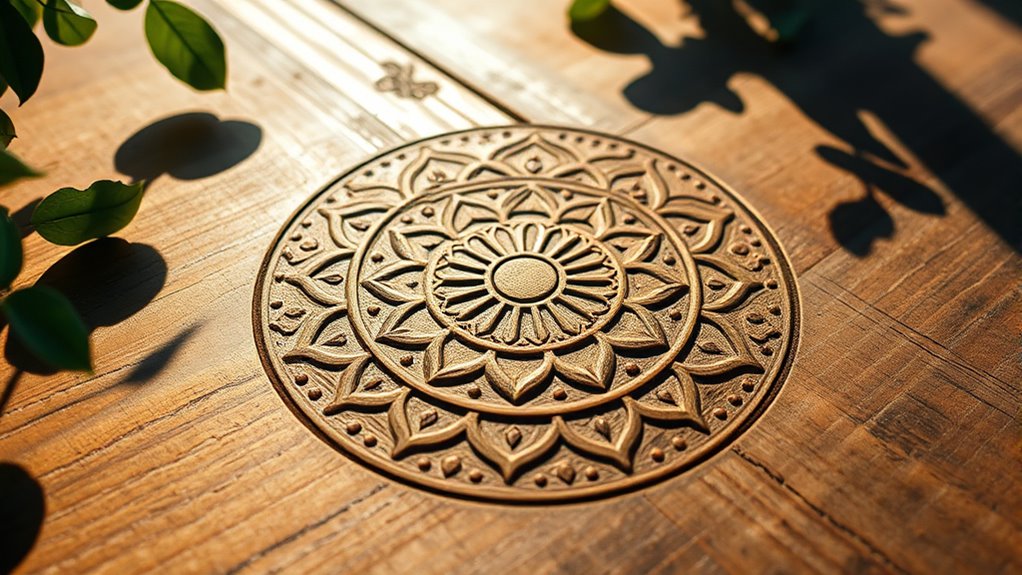
Sacred geometry, the study of fundamental patterns and shapes that appear throughout nature and human creations, is more present in your daily life than you might realize. From the spirals of shells to the structure of flowers, these patterns embody mathematical symbolism that reflects universal laws. When you observe a sunflower’s seed arrangement or the branching of trees, you’re witnessing nature’s inherent use of geometric principles. These forms aren’t random; they follow precise ratios and shapes that have fascinated humans for centuries. Recognizing these patterns helps you understand how deeply interconnected the natural world is with the designs humans create, especially in architecture. Moreover, understanding how mathematical symbolism influences design can deepen your appreciation for the intentionality behind many artistic and architectural works.
Sacred geometry reveals nature’s precise patterns underlying natural forms and human creations.
In architectural design, sacred geometry plays a essential role in shaping spaces that evoke harmony and balance. Architects often incorporate geometric principles like the golden ratio, which is rooted in mathematical symbolism, to craft buildings that are aesthetically pleasing and spiritually resonant. Think of famous structures like the Parthenon or Gothic cathedrals—these edifices employ ratios and proportions that align with sacred geometric principles. When you enter such spaces, you might feel a sense of awe or peace, which stems from the subconscious recognition of these harmonious proportions. Sacred geometry isn’t just about beauty; it’s about creating environments that resonate on a deeper, almost subconscious level, fostering a connection between the physical space and your inner sense of well-being.
You can also notice sacred geometry in modern design elements like logos, layout plans, and even urban planning. The repetition of geometric shapes in these contexts isn’t accidental; it’s rooted in the same principles that underpin natural forms and ancient architecture. These shapes evoke a sense of stability and order, making you feel more comfortable and connected. For example, the use of circles and triangles in logos or floor plans conveys unity and strength, tapping into the symbolic power of geometric forms. By understanding the mathematical symbolism behind these designs, you gain a new appreciation for how intentional and meaningful they are. They’re crafted not just for function but to evoke subconscious responses rooted in universal patterns.
Ultimately, sacred geometry reveals that the patterns you see in the world around you aren’t mere coincidence. They’re a reflection of timeless mathematical symbolism woven into the fabric of life and human creation. When you start noticing these shapes and ratios, you’ll see how deeply they influence everything from natural environments to the spaces where you live and work. This awareness allows you to appreciate the subtle but profound ways sacred geometry shapes your experience, linking the ancient with the modern through the universal language of patterns.
Frequently Asked Questions
How Can I Recognize Sacred Geometry in My Daily Environment?
To recognize sacred geometry in your daily environment, start observing patterns in architecture and natural formations. Notice the repetitive shapes, spirals, and proportions that appear in buildings, flowers, and even cloud formations. These patterns often follow specific geometric principles like the Fibonacci sequence or the golden ratio. By paying close attention to these details, you’ll begin to see how sacred geometry influences the world around you every day.
Are There Specific Symbols to Look for in Sacred Geometry?
When exploring sacred geometry, you’ll notice specific geometric symbols and sacred iconography that often appear in art, architecture, and nature. Look for symbols like the Flower of Life, the Vesica Piscis, or the Tree of Life, which embody divine proportions. These geometric symbols serve as visual representations of universal truths, helping you connect to deeper spiritual meanings embedded in everyday objects and structures around you.
Can Understanding Sacred Geometry Improve My Well-Being?
Understanding sacred geometry can boost your well-being by enhancing your mindfulness meditation and energy healing practices. When you recognize these patterns, you become more present, reducing stress and increasing inner peace. Applying sacred geometry helps you connect with universal energy, fostering balance and harmony. As you deepen this awareness, you may experience improved mental clarity, emotional stability, and physical health, making everyday life more centered and fulfilling.
Is Sacred Geometry Linked to Spiritual or Religious Practices?
You might wonder if sacred geometry connects to spiritual or religious practices. It definitely does, as it’s rooted in mathematical symbolism and holds cultural significance across many traditions. These geometric patterns often symbolize unity, harmony, and divine proportions, helping you feel more connected to something greater. By exploring these symbols, you can deepen your spiritual understanding and appreciate how different cultures express their beliefs through these meaningful patterns.
How Can I Incorporate Sacred Patterns Into My Personal Space?
Imagine your space as a garden where sacred patterns are the guiding vines. You can incorporate them by placing geometric shapes like mandalas or triangles in key areas to enhance energy flow. Use these patterns during geometric meditation to focus your mind and align your energy. Hang sacred symbols, arrange furniture in harmonious ratios, or create art inspired by sacred geometry to invite balance and positive energy into your personal space.
Conclusion
Now that you see how sacred geometry appears everywhere—from flowers to architecture—you can start noticing these patterns in your daily life. Recognize the harmony in nature, the balance in design, and the connection to something greater. Embrace the beauty of these hidden patterns, appreciate their presence, and let them inspire you. By understanding sacred geometry, you open your eyes, expand your perspective, and deepen your appreciation for the universe’s timeless design.