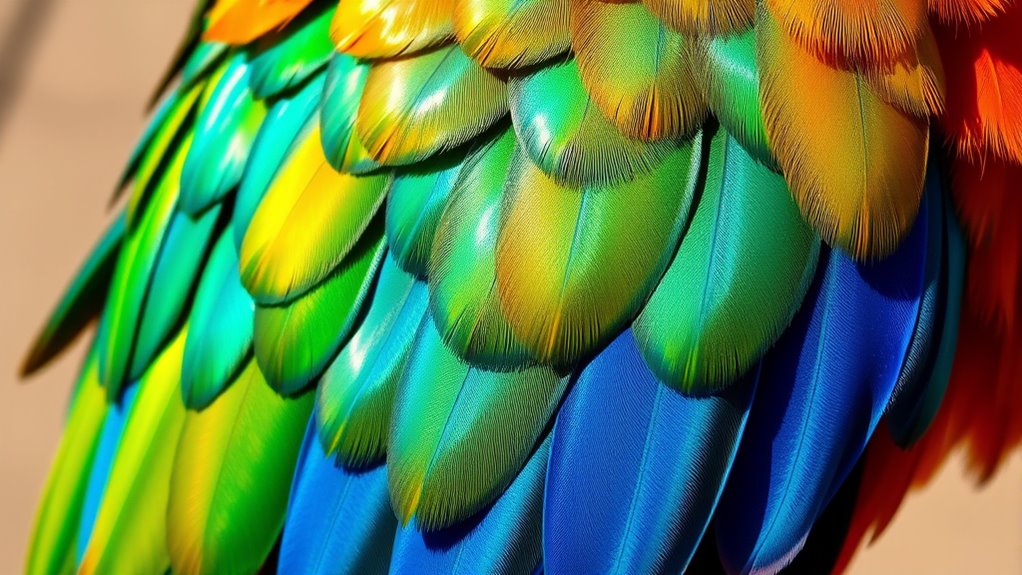

Feather colors tell you a lot about a bird’s health, species, and behavior. Bright or vibrant feathers often signal good health and mating fitness, while dull or worn feathers may indicate stress or illness. Colors like reds or pastels reveal its mood or environmental adaptations. Recognizing these messages helps you understand a bird’s role in nature and its social signals. Keep exploring, and you’ll uncover even more secrets behind those colorful feathers.
Key Takeaways
- Bright feather colors often indicate health, vitality, and reproductive fitness in birds.
- Unique color patterns help identify species and distinguish males from females.
- Color cues signal a bird’s current state, such as readiness to mate or migration timing.
- Symbolic meanings of feather colors, like white for purity or black for mystery, enhance cultural understanding.
- Recognizing feather colors and conditions aids in assessing bird health, behavior, and environmental adaptation.
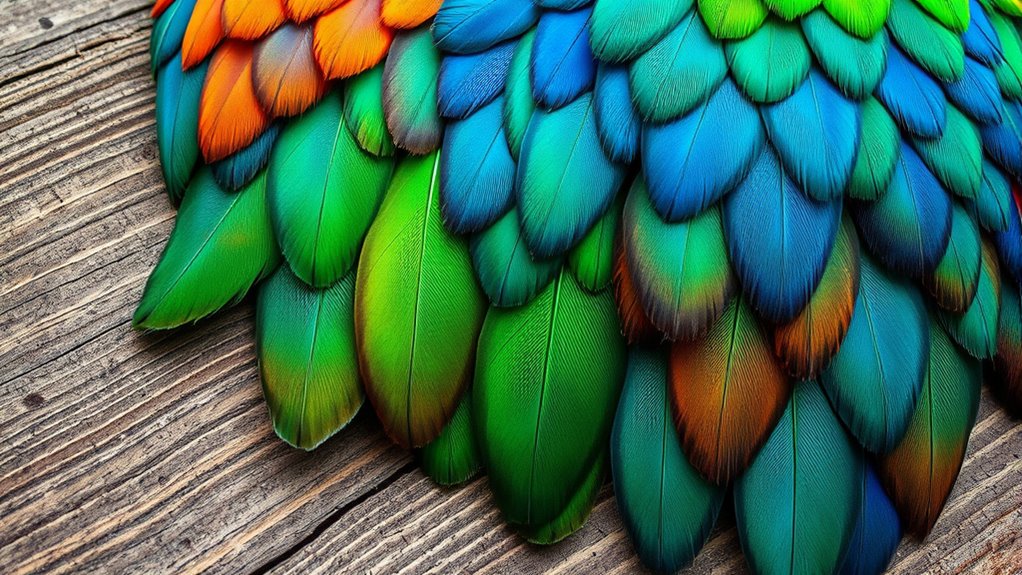
Feather colors are more than just eye-catching; they reveal important information about a bird’s health, species, and behavior. As you observe the plumage, you’ll notice that colors can carry symbolic meanings rooted in nature and human culture. Bright reds might symbolize vitality or aggression, while soft pastels often indicate calmness or innocence. Recognizing these symbolic meanings can deepen your understanding of a bird’s role within its environment, helping you interpret its actions and interactions more accurately.
Feather colors reveal health, behavior, and cultural symbolism in birds.
When it comes to feather identification, color plays a pivotal role. Different species boast unique color patterns that serve as visual markers, aiding in distinguishing one bird from another. For example, the vibrant blue of a kingfisher or the iridescent green of a hummingbird can instantly tell you what species you’re looking at. Learning to identify these colors, along with specific markings, makes it easier to classify birds in the field. Keep in mind, though, that feather colors can sometimes vary within a species depending on age, sex, or season. Males often sport brighter, more striking colors to attract mates, while females might have more subdued tones for camouflage.
Colors also serve functional purposes beyond identification. Brightly colored feathers can signal good health and genetic fitness, making a bird more appealing to potential mates. Conversely, dull or worn feathers might indicate illness or stress. Recognizing these subtle cues can inform you about a bird’s current state, whether it’s preparing for migration or recovering from a nearby threat. Additionally, some colors serve as camouflage, helping birds blend into their surroundings and avoid predators. For instance, mottled browns and grays allow certain species to disappear into foliage or tree bark, emphasizing the importance of feather coloration in survival strategies.
Understanding feather colors extends to appreciating their symbolic messages across cultures. Many traditions associate specific colors with particular virtues or warnings. For example, white feathers often symbolize purity or peace, while black feathers might be seen as omens or symbols of mystery. These symbolic meanings can add layers of significance when observing birds in their natural habitat or during specific cultural contexts. By mastering feather identification and understanding these symbolic messages, you’ll not only enhance your birdwatching skills but also gain a richer appreciation for the stories feathers tell—stories of survival, beauty, and cultural symbolism all woven into a bird’s plumage.

Bird Feathers
As an affiliate, we earn on qualifying purchases.
As an affiliate, we earn on qualifying purchases.
Frequently Asked Questions
Do Feather Colors Vary Across Different Bird Species?
Yes, feather colors vary across bird species. You’ll notice that some use vibrant colors for mating displays, attracting mates with striking hues. Others have more subdued tones for camouflage strategies, helping them blend into their environment and avoid predators. This variation allows each species to adapt to their specific needs, whether for attracting partners or staying safe. So, the colors you see are often tailored to each bird’s unique survival and reproductive strategies.
Can Feather Colors Change Over a Bird’s Lifetime?
Yes, feather colors can change over a bird’s lifetime. You might notice this during molt cycles or seasonal changes when birds shed old feathers and grow new ones. These processes often lead to variations in color, brightness, or pattern. Environmental factors, age, and health also influence color changes. So, as you observe, a bird’s appearance can shift subtly or dramatically throughout its life, reflecting its stage of development or seasonal adaptations.
Are There Cultural Differences in Interpreting Feather Colors?
Yes, there are cultural differences in interpreting feather colors. You might see a bright red feather as a symbol of passion in one culture, while in another, it signifies danger or warning. Regional interpretations shape how you understand these colors, influenced by cultural symbolism and traditions. As you explore different societies, you’ll notice how meanings shift, reflecting unique beliefs and historical contexts that color your perception of feathers’ messages.
How Do Environmental Factors Influence Feather Coloration?
Environmental factors like UV reflection and diet influence feather coloration markedly. You’ll notice that UV light affects how colors appear, making some feathers shimmer or change shade. Your diet plays a vital role, as nutrient intake impacts pigment production, leading to brighter or duller colors. By paying attention to these factors, you can better understand why feathers look the way they do and how environmental conditions shape their vibrant displays.
What Role Do Genetics Play in Feather Color Variations?
Genetics play a vital role in feather color variations through genetic inheritance, which determines the specific pigments your bird’s feathers develop. You might think environment solely influences color, but your bird’s DNA controls the type and amount of feather pigmentation produced. This genetic blueprint sets the foundation for vibrant hues or subtle shades, with mutations sometimes creating stunning new colors. So, understanding your bird’s genetics helps explain the beautiful diversity in feather coloration.

Occer 12×25 Compact Binoculars for Adults and Kids, Large Eyepiece Waterproof Binocular with Low Light Vision,High Powered Easy Focus Binoculars for Bird Watching,Outdoor Hunting,Travel,Sightseeing
【HIGH-POWERED LARGE EYEPIECE BINOCULARS】 This binoculars for adults has 12x magnification, 25mm objective lens and wide field of…
As an affiliate, we earn on qualifying purchases.
As an affiliate, we earn on qualifying purchases.
Conclusion
You now understand how feather colors reveal messages from nature. Bright reds symbolize passion, while shimmering blues indicate tranquility. Did you know that studies show birds with vibrant plumage are 30% more likely to attract mates? By paying attention to these colors, you can better interpret their signals and appreciate their beauty. Keep observing their feathers, and you’ll discover even more fascinating stories written in nature’s colorful language.
Peterson Field Guide To Birds Of Eastern & Central North America, Seventh Ed.: The Classic Birding Guide with the Legendary Peterson System
As an affiliate, we earn on qualifying purchases.
As an affiliate, we earn on qualifying purchases.

Celestron – UpClose G2 10–30×50 Binocular – 10-30x Zoom Binoculars for Beginners – Multi-Coated Optics for Bird Watching, Wildlife, Scenery and Hunting – Porro Prism – Includes Soft Carrying Case
LARGE 50MM OBJECTIVE LENSES: Larger objective lenses gather more light and produce brighter, more detailed images. These 50mm…
As an affiliate, we earn on qualifying purchases.
As an affiliate, we earn on qualifying purchases.