TL;DR

Turn your quiet moments into listening time
- Thousands of audiobooks, podcasts and originals
- Listen on your phone, tablet or Echo — also offline
- Cancel anytime
This article traces the transformation of tarot cards from a European card game in the 15th century to a popular tool for spiritual and divinatory practices today. It discusses confirmed historical facts, claims about symbolic meanings, and current debates among scholars and practitioners.
Tarot cards, once primarily a recreational card game in 15th-century Europe, have evolved into a widely used tool for divination and spiritual guidance, according to historical records and contemporary practices. This transformation highlights the intersection of art, symbolism, and spirituality, making tarot a subject of ongoing interest among scholars, artists, and practitioners.
Historically, tarot originated in the mid-15th century in Italy as a card game called “tarocchi,” with no initial association with mysticism or divination. The earliest decks, such as the Visconti-Sforza cards, were elaborate and artistically significant, often commissioned by aristocratic patrons.
It was only in the 18th century that tarot began to be linked with mysticism, astrology, and the occult, largely through French and British esoteric traditions. The development of symbolic imagery on tarot cards, especially during the 19th and early 20th centuries, contributed to its use as a divinatory tool.
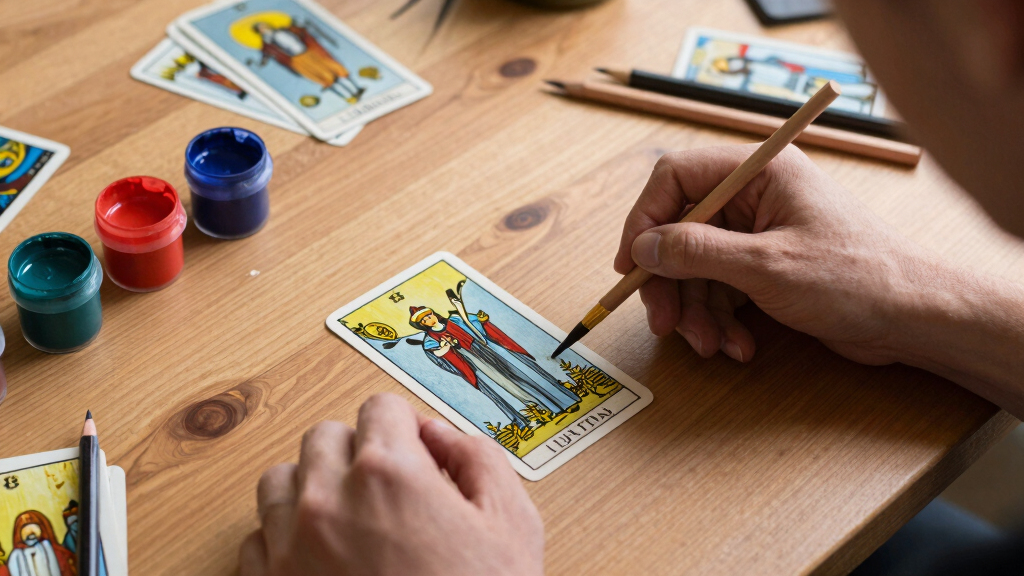
Modern tarot decks, such as the Rider-Waite-Smith, introduced standardized symbolism that practitioners interpret for spiritual insight. Scholars note that the artistic style of tarot has continuously evolved, blending historical art movements with esoteric symbolism, reflecting broader cultural shifts.
Why the Artistic and Cultural Shift Matters
The evolution of tarot from a simple card game to a complex spiritual tool underscores the enduring importance of symbolism and art in human culture. It also illustrates how cultural artifacts can acquire new meanings over time, influencing contemporary spiritual practices and popular culture. Understanding this history helps contextualize tarot’s role in modern society and its appeal across diverse communities.
As an affiliate, we earn on qualifying purchases.
Historical Roots and Artistic Developments of Tarot
Originally created as a recreational game in Italy, tarot decks were highly decorative and artistically significant, often commissioned by aristocrats. The transition to mystical usage gained momentum in the 18th century, with key figures like Antoine Court de Gébelin proposing links between tarot symbols and ancient Egyptian mysteries. The 19th and 20th centuries saw the publication of influential decks, such as the Rider-Waite-Smith, which standardized many symbols used today.
Throughout this period, artists and mystics collaborated to embed layered symbolism into tarot imagery, blending artistic styles from different eras, including Art Nouveau and Surrealism, into deck designs. This artistic evolution reflects broader cultural trends and the changing perceptions of spirituality and self-exploration.
“Tarot’s artistic style has continuously evolved, mirroring broader cultural and artistic movements, which has helped sustain its relevance across centuries.”
— Dr. Lisa Miller, historian of European art
As an affiliate, we earn on qualifying purchases.
Unresolved Debates Over Tarot’s Origins and Meaning
While the origins of tarot as a card game are well-documented, the precise influence of ancient mysticism and the extent of its esoteric symbolism remain subjects of scholarly debate. Some researchers question the direct links proposed between tarot and Egyptian or Kabbalistic traditions, noting a lack of definitive evidence.
Additionally, the interpretation of tarot symbols varies widely among practitioners, leading to ongoing disagreements about its spiritual authority and the universality of its symbolism. The extent to which artistic choices influence or reflect spiritual truths remains an open question.
As an affiliate, we earn on qualifying purchases.
Future Directions in Tarot Research and Practice
Research continues into the historical origins and artistic influences shaping tarot decks, with scholars seeking to clarify its cultural evolution. Meanwhile, contemporary practitioners are experimenting with new decks that blend traditional symbolism with modern art styles, potentially broadening tarot’s appeal.
Developments in digital technology and online communities are also expanding access to tarot reading, raising questions about how its artistic and spiritual significance will adapt in the digital age.
As an affiliate, we earn on qualifying purchases.
Key Questions
How did tarot evolve from a card game to a divination tool?
Initially created as a recreational card game in 15th-century Italy, tarot decks gained mystical associations in the 18th century, with symbolic imagery used for spiritual and divinatory purposes. Artistic and cultural shifts helped solidify this transformation.
Are all tarot decks equally symbolic and meaningful?
While many decks share common symbolism, interpretations can vary widely among practitioners. The artistic style and symbolism embedded in each deck influence its use and perceived meaning.
What role does art play in the significance of tarot today?
Artistic design and symbolism are central to tarot’s function, providing visual cues for interpretation and spiritual reflection. The evolution of deck artwork reflects broader cultural and artistic trends.
Is the connection between tarot and ancient Egyptian or mystical traditions proven?
Scholars acknowledge that some early proponents linked tarot to these traditions, but there is limited concrete evidence. The associations are largely based on esoteric interpretations rather than definitive historical proof.
Source: rss
Columbus Day / Indigenous Peoples' Day Picks
long weekend sales
As an affiliate, we earn on qualifying purchases.